Showing posts with label reading. Show all posts

Wednesday, March 27, 2024


I love reading to my grandkids. When my children were younger, I loved reading to them. At the time, I didn't realize what a great impact it would have on their lives. Want to learn the science behind parent-to-child reading, as well as get an update on my latest author activities? Check out my March newsletter. https://www.kenbakerbooks.com/news202403.html

Thursday, December 5, 2013

What About Early Readers?

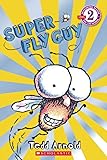
Librarian extraordinaire Travis Jonker always has insightful posts at SLJ's 100 Scope Notes. I especially like his post today where he talks about the constant demand he gets from grade school students asking for more early reader books like Tedd Arnold's Fly Guy. Travis talks about how insanely popular Fly Guy is among his young patrons and wonders why there aren't more new books like it.

I often have that same question. The truth is that early readers are a hard sell to most children's book publishers. Not many pursue them. Of the handful of publishers that do, most don't seem to have the desire to expand their line beyond what they call their "current properties". Translation: movie tie-ins or proven best sellers. You can't expect many new early reader lines from publishers with that kind of strategy.

But a few publishers get it. In fact, I recently had a publisher ask me to submit a series proposal on an early reader I submitted to them. It went a couple of rounds through their acquisition committee, with some editors very excited about it, but ultimately they decided to pass on it. However, they invited me to submit some other early reader book manuscripts and proposals. We'll see what happens. But I applaud publishers like that who aggressively seek to publish early readers, not only their current line of books, but new and exciting fresh ones too.

As Travis Jonker states in his post, "The world needs more early readers with very basic vocab and an attention-grabbing main character. I know it ain’t an easy order, but there are some eager young readers out there."

I agree with Travis and I hope there end up being a few more publishers that do too.


Monday, September 23, 2013

How eReaders Combat Dyslexia

Technology is a wonderful thing. I'm still not an eReader user, but I definitely see many of the benefits; convenience, library all in one place, easier access to books, lighter weight, cost, great on a commute or traveling, and so on. With all those benefits I'm very certain, one day I'll take the eReader plunge - or at least tip my toe in the water deeper.

I'm certain the benefits of eReaders will continue to grow, especially as technology improves. To this point, researchers at the Smithsonian have discovered that the use of eReaders can in some cases improve the reading capability of some individuals with dyslexia. Particularly, it can helps those individuals with visual attention deficit and visual crowding.

Visual attention deficit is when the reader has a difficult time concentrating on letters within words or words within lines of text. Visual crowding is when the reader struggles to recognize letters when they are cluttered within a word. eReaders can address both of these issues when they are set up to display shorter lines. The shorter lines reduce the visual distractions, which ultimately led to significantly improved reading speed and comprehension with students who exhibit these forms of dyslexia.

The researchers' findings are covered in an article published by Science Daily, appropriately entitled E-Readers Can Make Reading Easier for Those With Dyslexia. As I said before, technology is a wonderful thing.

Wednesday, September 18, 2013

Why Reading for Pleasure Makes Kids Smarter

A great article in The Guardian talks about how children who read for pleasure do better not only in vocabulary and spelling, but also mathematics. The article cites a study of 17,000 people, who The Guardian has interviewed over the years to gain insights into the different issues that affected participants' individual development. The article suggests two main reasons why pleasure readers excel over their peers.The first is that reading "introduces young people to new words", explaining their vocabulary success. The second is "that reading also introduces young people to new ideas."

I agree with both of these, but I think there is an even more compelling reason. Simply put, children master the skill of reading the more they read. Children who read when they don't have to, develop reading skills far greater than those who only read when they have to read. The greater the reading skills, the better the child will be able to understand and comprehend concepts in their text books. As a result, master readers have a greater ability to master other subjects.

Any other thoughts on why reading for fun makes kids smarter?

Image courtesy of jannoon028 / FreeDigitalPhotos.net

Image courtesy of Ambro / FreeDigitalPhotos.net


Tuesday, July 30, 2013

Favorite Children's Books - A Harm or Help?

When I was little - even before I could read - one of my favorite books was Curious George. There were other books that I liked, but there was something about that curious monkey and the book’s illustrations that really appealed to me. When my mom took me to our public library, I’d head straight to the children’s section and grab some Curious George books. I might have checked out other books too, but I don’t remember them. I remember wanting Curious George. That’s what made me want to go to the library. That’s what helped fuel my love of books.

That memory raises certain questions in my mind.

  • How important is it for young children to discover their own favorite book or books?
  • Is it harmful or helpful for parents, teachers, and librarians to discourage children to fixate on a specific book?
  • Does focusing on a favorite book limit a child’s reading world in the long-run or just short term, or does it help create an early love for reading that will ultimately open the child to a much broader world of books?

Personally, I think having a favorite book can be a good thing for a child. Is it essential? No, but I think when a child finds a favorite book or favorite books, it definitely fuels their love for reading. I think the same can be said when a child discovers a favorite genre. When they find books they love, they’ll love to read.

While I think it’s fine for parents, teachers and librarians to encourage children to read a wide variety of books and genres, it can be harmful if too much pressure is put on a child not to stick with a favorite book or genre. Children need to be empowered with choice in reading. Over time their tastes will vary and change, and they will naturally branch out into other books. The important thing is to get them reading and to help them find books that will inspire them to read and learn more.


Monday, July 8, 2013

When is the best time to read to your children?

The simple answer. Whenever you can. Every family situation is different. For us, right before bedtime always worked best. It was a great time to help settle the kids down before putting them to bed. It also made bedtime more enjoyable for us and the kids. Often I had chief bedtime reading responsibilities. Sometimes my wife did. Frequently we shared the responsibility with a divide and conquer approach to bedtime reading.

Reading at bedtime doesn’t work for everyone. Maybe the best time for some parents to read to their children is right before or right after an afternoon nap. Maybe it’s after your child comes home from school. Perhaps, the best time to read to your child comes while you’re sharing an afternoon snack. Maybe it’s during trips to the library.

The important thing is to read to your children – everyday if possible. Reading often to your children is crucial to the development of their own ability to read. Start young and read often. Find the time and location that works best for you and your children, and then try to make it a habit.

Image courtesy of Ambro / FreeDigitalPhotos.net

Monday, June 17, 2013

Reading Comprehension Lesson Plan

I've added a new lesson plan on my website to help teachers help their students develop reading comprehension skills and comprehending key ideas and details in stories. Take a look at it and feel free to share it with others

Reading Comprehension Lesson Plan

Thursday, May 30, 2013

How to Open Doors to Learning

I love libraries. Before I could read my mom would often take me to our local public library. I would check out my favorite picture books, which usually consisted of various Curious George books. I would take them home, turn the pages, look at the pictures and pretend I could read the words. It established in me a love of books and a desire to read. It also made the library a comfortable place for me to visit.

As I grew older, libraries became a place of learning for me. I wasn't one who would spend hours holed up in the library reading book after book. But if wanted to learn something new, the library was often the first resource I would turn to. I still remember when I was a teenager and first learning how to snow ski. I went to the library to check out a book on skiing and read about the finer points of the snowplow technique, followed by the parallel ski. Anything I wanted to learn about I could find in the library.

Today, the Internet often becomes the first place that people turn to gain new knowledge. That's okay. But we shouldn't let our children grow up thinking that the worldwide web is the only viable resource beyond their textbooks for research and gaining knowledge. Until the day when all the vast physical collections within libraries become digitized, our children need to learn to feel at home within the walls of their local library and practice the valuable skill of cracking open a physical book. Frequent visits to the library with our children will make that happen. Those frequent library visits will also instill within our children a life-long love of reading.

But don't forget that today's libraries aren't just about physical books and references. The ever-growing digital collections that many libraries work to build provide even greater and easier access to extensive reservoirs of knowledge, opening the doors of learning wider than ever before.

Monday, May 6, 2013

Power of Reading

There is real power in reading. When I present at schools, one of the things I talk about to young students is how when we read a book it powers our imagination in a way that we can become anything or do anything while we read that book. But reading lets us do much more than just imagine we can do anything, it literally gives us the power to become and do. Not only does reading open our eyes to new possibilities, it has the power to transform new possibilities into new realities.

A child that masters reading opens the door to an endless array of opportunities for success and happiness. Their choices become virtually unlimited. To paraphrase William Godwin, reading puts everything within our reach.