Thursday, May 22, 2014

What Makes a Great Picture Book - Tip 2

Donkey
great picture book characters are like parfaits

Great Picture Book Characters are Like Parfaits

great picture book characters are like parfaits
Flat, one-dimensional characters will doom a picture book. Similar to being larger-than-life, the main character in your picture book needs to be dynamic. By the end of the story, great picture book characters experience growth. Of course, for a character to actually experience growth it follows that the character must have shortcomings or flaws. A perfect character is a boring character.

It might seem obvious, but multidimensional characters need to have multiple characteristics or aspects of their personality to give them depth. Or as Shrek might say, great picture book characters are onions. Onions have layers. Great picture book characters have layers. Or if you prefer to be in the Donkey camp, you could also say that great picture book characters are like parfaits. Especially if you’re talking about parfaits with layers of melted chocolate, vanilla pudding, bananas, chocolate cookie bits and whipped cream on top. With all those delicious layers you can’t go wrong. Bottom-line, whether you prefer onions or parfaits, your picture book’s main characters need layers to make them more dynamic, interesting and irresistible.

Creating multidimensional, parfait like characters will be another topic of discussion at the Picture Book Writing workshop I’ll be teaching at the Writing and Illustrating for Young Readers (WIFYR) conference from June 16-20.

Monday, May 19, 2014

What Makes a Great Picture Book - Tip 1

Larger than Life Characters

Characters can make or break a picture book. Donald Maass, literary agent and author of WRITING THE BREAKOUT NOVEL, talks about the importance for novels to have larger-than-life-characters. These are characters that act in unusual, unexpected, or dramatic ways. These are characters that do or say things that we wish we could do, but don't ever dare  to do or we are not able to do.

Larger-than-life-characters are not only important for novels, but they’re important for picture books too. Think PETE THE CAT, OLIVIA, CURIOUS GEORGE, and NO, DAVID. The characters in these stories are what make children want to read them over and over again. Want to write a great picture book? Start with a larger-than-life-character at its heart. The characteristics of larger-than-life-characters might include wit, spontaneity, compassion, daring, quirkiness, perseverance, cunning, humor, likeability, and so on.

Developing larger-than-life-characters is just one of many things I’ll be discussing from June 16-20 in the Picture Book Writing workshop I’ll be teaching at the Writing and Illustrating for Young Readers (WIFYR) conference in Sandy, Utah. There are still a few slots open if you're interested.

Thursday, May 15, 2014

National Chocolate Chip Cookie Day

I never knew there was such a thing until my wife just told me. But today is National Chocolate Chip Cookie Day. I just had to blog about this momentous occasion. Chocolate chip cookies happen to be one of my favorite food groups. They're almost right up there with ice cream. Why aren't there bigger celebrations for this wonderful holiday? There should be parades. Balloon floats. Fireworks. Cookie barbecues. Paid holidays. Do your part, enjoy a chocolate chip cookie today with someone you love. :)

Tuesday, March 11, 2014

Want to learn how to write picture books?

Want to learn how to write picture books? I'll be teaching a week-long workshop at the Writing and Illustrating for Young Readers (WIFYR) conference in June. It's hands-down, the best writer's conference in Utah, and one of the best in the U.S.  In addition  to my morning PB workshop, as well as other writing workshops, there will be afternoon presentations from editors, literary agents, and bestselling authors.


Check out the website for more info http://www.wifyr.com/.

Friday, February 28, 2014

Why Don't Boys Read

A children’s author friend of mine is writing an article for a local newspaper about getting boys to read. In her research for the article, she posed a few questions on a forum of local published children’s authors that I participate in. Below are my responses to her questions.

1. A lot of people who work with kids will tell you that it's harder to get young boys to read than it is to get young girls to.  If you agree, why is this the case?

I agree, and I believe one of the main reasons is that so often at school (even at home) books are pushed onto boys that just are not interesting to them. Every boy is different, and every boy will have different tastes, but most boys want books that are fast-paced, exciting, adventurous or humorous, which typically does not fall into the same category as the more literary types of books that they are assigned at school. If all the books they are made aware of are books that bore them to tears, they will have the sentiment that all books are boring.

In some cases boys will find books that do appeal to them, only to have teachers or parents turn their nose up at those books or tell the boy that those books are trash, a waste of time or aren’t real books. At times, those who can play a role in inspiring a boy to read, unknowingly turn the boy off of reading by their attitude towards the books a boy wants to read, whether it be fantasy, comic books/graphic novels, or whatever.

2. How do you get boys to read?

The best way to get a boy to read is to read to them when they are very young. After that, it’s to let them choose the books they want to read – give them options and help them find books that might be of interest to them. An indirect way to get boys to read is for them to see male role models reading and enjoying reading. Sometimes boys might get the feeling that reading is not cool, but seeing a positive role model reading helps dispel that notion.

3. What titles would you recommend?
It’s a little over a year old, but on my blog I have a list 70 books to help get boys reading. You can take a look at it at New Books to Get Boys Reading.


I have also written few posts in the past on getting children to read. Check them out below;

# 1 Way to Get Children to Read
# 2 Way to Get Children to Read
# 3 Way to Get Children to Read
# 4 Way to Get Children to Read
# 5 Way to Get Children to Read


Image courtesy of imagerymajestic / FreeDigitalPhotos.net

Wednesday, February 26, 2014

What I’ve Learned About Writing a Picture Book

Guest post from Cindy Stagg
When I left teaching to raise a family, I decided that I would write a picture book. Easy, right? Tell a cute little story, get someone else to illustrate it, and voilá! You’re a beloved children’s author! It’s such a seemingly simple plan.

I wrote a few stories that I thought were pure gold. I bought The Writer’s Market Guide and sent my manuscripts off to publishers and agents whom I was sure would race to their phones to call me personally. I also started attending writing conferences and workshops, where I quickly learned why my phone wasn’t ringing off the hook.

Here’s the thing: writing a picture book is like painting the ceiling of the Sistine Chapel. It takes a great deal of hard work and plenty of finesse. You have to make the pictures and the words work together to tell a complete story, and you have to do it within a confined space. Sometimes, you’ll even find yourself doing it on your back! Whenever someone says to me, “Yeah, I think I’ll write a picture book one day,” I sort of laugh to myself, knowing they have no idea what they’re in for.

When I first started attending workshops and conferences (including WIFYR) it was like taking a drink from a fire hose. There was so much information -- some of it even conflicting: It should be no more than a thousand words. It should be at least a thousand words. Make sure it has a good hook. It shouldn’t have a moral message. The character should solve her own problems. Make sure it speaks to children, but winks at adults. Make your main character appealing. Write a gripping beginning. The end of your story is crucial.

Whew!

Since then, I’ve learned to contain the information and knowledge I’ve gleaned into a manageable fountain. I’ve worked hard over the years to find out what it takes to write a good picture book. I’ve taken notes from Ken Baker, Rick Walton, and Candace Fleming. I’ve written, rewritten, and storyboarded. Most importantly, I’ve read hundreds and hundreds of picture books. The ones I’ve liked, I’ve tried to emulate. The ones I didn’t, I tried to figure out why.

What it comes down to is this: if you want to write a picture book, and I mean a good picture book, you’re going to have to work for it. Read lots of books and know your market. Attend conferences like Writing and Illustrating for Young Readers, where Ken will be teaching this summer. Then, take everything you’re learning, and write. Write every day, because it’s the only way to improve.


Cindy will be assisting at this year's Writing & Illustrating for Young Readers conference, including assisting Ken as he teaches the picture book workshop. Cindy has always loved writing stories. Growing up in Arizona, she won essay contests and published stories in the school newspaper. She became a teacher because that was the more “practical” thing to do. Then one day, she was offered a job as an automotive writer (she’s also always been a car nut), and Cindy fell in love with writing all over again! “WIFYR has given me confidence in my ability and helped me create a network of friends and colleagues who have given me invaluable feedback,” says Cindy. She is excited to be assisting at WIFYR this year.

Also, watch for the upcoming interview with Ken Baker on the WIFYR blog.

Thursday, December 5, 2013

What About Early Readers?

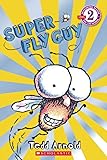
Librarian extraordinaire Travis Jonker always has insightful posts at SLJ's 100 Scope Notes. I especially like his post today where he talks about the constant demand he gets from grade school students asking for more early reader books like Tedd Arnold's Fly Guy. Travis talks about how insanely popular Fly Guy is among his young patrons and wonders why there aren't more new books like it.

I often have that same question. The truth is that early readers are a hard sell to most children's book publishers. Not many pursue them. Of the handful of publishers that do, most don't seem to have the desire to expand their line beyond what they call their "current properties". Translation: movie tie-ins or proven best sellers. You can't expect many new early reader lines from publishers with that kind of strategy.

But a few publishers get it. In fact, I recently had a publisher ask me to submit a series proposal on an early reader I submitted to them. It went a couple of rounds through their acquisition committee, with some editors very excited about it, but ultimately they decided to pass on it. However, they invited me to submit some other early reader book manuscripts and proposals. We'll see what happens. But I applaud publishers like that who aggressively seek to publish early readers, not only their current line of books, but new and exciting fresh ones too.

As Travis Jonker states in his post, "The world needs more early readers with very basic vocab and an attention-grabbing main character. I know it ain’t an easy order, but there are some eager young readers out there."

I agree with Travis and I hope there end up being a few more publishers that do too.